Quantum Dot CQD: Powering Next-Gen SWIR Imaging Sensors
When one encounters the acronym "CQD," a fascinating duality emerges. For many, particularly those interested in maritime history or early radio communications, CQD Bedeutung immediately conjures images of the very first international distress signal. However, in the realm of cutting-edge technology, CQD takes on an entirely different, yet equally significant, meaning: Colloidal Quantum Dots. These minuscule semiconductor nanoparticles are not signaling danger, but rather heralding a new era for imaging, specifically in the Short-Wave Infrared (SWIR) spectrum. This article delves into how this modern CQD technology is revolutionizing SWIR imaging sensors, making advanced vision more accessible and powerful than ever before.
Beyond the Call: Deciphering the Dual Meaning of CQD
To fully appreciate the innovation behind modern CQD sensors, it's essential to first understand the historical weight of the acronym. Dating back to 1904, the Marconi International Marine Communication Company introduced "CQD" as the designated distress call for its wireless telegraphy installations. Transmitted in Morse code, it was intended as a "general call" (CQ) signaling "distress" (D). While popular belief often interprets it as "Come Quick, Danger" or "Come Quickly: Distress," these are merely clever backronyms. Its true meaning, understood by wireless operators, was "All stations: distress." Despite its widespread use by Marconi operators globally, CQD was never adopted as an international standard dueaving to concerns that poor reception could confuse it with a general "CQ" call. It was eventually superseded by the now universally recognized SOS signal in 1906, ensuring clarity in times of grave danger.
Fast forward to the 21st century, and the term "CQD" has been repurposed in an entirely unrelated, yet equally impactful, context. Today, it stands for Colloidal Quantum Dots, a class of nanomaterials at the forefront of optoelectronic innovation. This modern CQD technology, as we'll explore, represents a monumental leap in sensor capabilities, particularly for SWIR imaging, a far cry from its predecessor's role in maritime peril. To learn more about this interesting transition, you can delve deeper into CQD Uncovered: From Early Distress to Advanced Sensor Tech.
The Quantum Leap: What are Colloidal Quantum Dots (CQDs)?
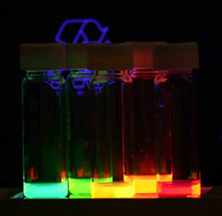
Colloidal Quantum Dots (CQDs) are tiny semiconductor nanocrystals, typically just a few nanometers in diameter. Their diminutive size is precisely what gives them their extraordinary properties. At this scale, quantum mechanical effects dominate, meaning their electronic and optical properties, such as the color of light they absorb or emit, can be precisely tuned simply by changing their size. For instance, smaller quantum dots of the same material will absorb and emit bluer light, while larger ones will handle redder light.
In the context of SWIR imaging, materials like lead sulphide are commonly used. These CQDs offer several distinct advantages over traditional semiconductor materials. Crucially, they can be fabricated quickly and at significantly lower costs than conventional, slow, and expensive semiconductor growth techniques. Imagine creating advanced sensor materials in a process akin to applying paint or ink; CQDs can be deposited using simple, scalable methods like spin-coating or spraying onto various substrate surfaces. This flexibility even extends to lumpy or flexible substrates, opening up possibilities for novel sensor designs previously unattainable with rigid, meticulously grown semiconductor wafers.
This "paint-on" approach drastically reduces manufacturing complexity and capital expenditure, making high-performance imaging technology far more accessible.
Revolutionizing Vision: CQD Sensors for SWIR Imaging
Short-Wave Infrared (SWIR) imaging operates in the electromagnetic spectrum between 900 nm and 1700 nm. Unlike visible light, SWIR light can penetrate through various materials opaque to the human eye or standard cameras, such as fog, haze, silicon, and many plastics. This makes SWIR invaluable for a diverse range of applications, from industrial inspection and quality control to security, agriculture, and autonomous navigation.
Historically, SWIR cameras have been prohibitively expensive, large, and power-intensive, largely due to the complex and costly indium gallium arsenide (InGaAs) sensors they rely on. This is where CQD technology marks a true paradigm shift. Companies like SWIR Vision Systems, based in Durham, NC, USA, have pioneered a new class of cameras featuring broadband image sensors (400-1,700nm) based on colloidal quantum dot thin-film photodiodes. Their innovative approach involves a monolithic integration where the quantum dot-based sensor is fabricated directly onto CMOS readout integrated circuits (ROICs) using well-established, low-cost semiconductor deposition techniques. This direct integration streamlines the manufacturing process, enhances performance, and dramatically reduces the overall cost and footprint of SWIR imaging solutions.
By leveraging the unique properties and cost-effective fabrication of CQDs, these sensors overcome the major barriers that have limited SWIR adoption. They offer high performance across a broad spectrum, paving the way for advanced imaging capabilities in applications that were once deemed too costly or technically challenging.
The Future is Bright: Advantages and Impact of CQD SWIR Technology
The advent of CQD-powered SWIR imaging sensors brings a host of benefits that are set to redefine how we perceive and interact with our environment:
- Unprecedented Cost-Effectiveness: The ability to "paint on" CQD films using low-cost semiconductor deposition techniques fundamentally changes the economic landscape of SWIR imaging. This makes advanced vision systems accessible to a much broader market, democratizing a technology previously reserved for niche, high-budget applications.
- Rapid & Scalable Manufacturing: Unlike slow and expensive traditional semiconductor growth, CQD films can be created quickly, allowing for high-volume production and faster innovation cycles.
- Broadband Spectrum Coverage: With a typical response from 400nm to 1700nm, CQD sensors offer comprehensive imaging capabilities, capturing both visible and SWIR light in a single sensor. This eliminates the need for multiple cameras or complex filtering, simplifying system design and reducing costs.
- Versatility & Flexibility: The ability to deposit CQDs on various substrates, including flexible materials, opens doors for novel form factors and applications, such as wearable SWIR devices or sensors integrated into irregular surfaces.
- Enhanced Performance: Despite the low cost, CQD sensors offer high quantum efficiency and sensitivity in the SWIR range, delivering clear, detailed images even in challenging conditions where visible light fails.
The impact of these advantages is far-reaching. In autonomous vehicles, CQD SWIR cameras can see through fog, heavy rain, and direct sunlight glare, providing crucial safety information. For industrial inspection, they can differentiate between various plastics for recycling, detect hidden defects in materials, or monitor food quality. In security and surveillance, they can see through camouflage, identify concealed objects, or provide covert night vision. The applications extend to medical diagnostics, agricultural monitoring, and even consumer electronics, where SWIR could enable new features for smartphones and smart home devices. CQD technology isn't just an incremental improvement; it's a foundational shift making advanced vision ubiquitous.
In conclusion, while "CQD Bedeutung" once referred to a bygone distress signal, the modern interpretation of CQD as Colloidal Quantum Dots signifies hope and progress in the world of technology. These remarkable nanoparticles are not only making high-performance SWIR imaging sensors more affordable and manufacturable but are also unlocking entirely new possibilities across countless industries. From enhancing safety and efficiency to enabling novel scientific discoveries, the power of next-gen SWIR imaging sensors, fueled by quantum dot CQDs, is set to transform our ability to perceive the world around us.